

I Read 57 Books in 2025. Only One Changed My Life Forever
The obscure 2017 book that quietly crushed every productivity bestseller this year.

Limited time: Get the Top 10 Substack Take-off Secrets free (paid members only after December 31st)

The ten foundational steps to turn your writing into a sustainable business. Stop guessing what to write, who to write for, and how to make money. These ten steps give you the complete business foundation successful creators built before they “made it.”
I read 57 books this year.
That’s not a brag. I’m not naturally some voracious reader who tears through books like they’re made of candy—or at least I wasn’t. I just decided in January to read more, built a habit around it, and stuck with it. Four or five books a month, mostly on Kindle few on physical form.
Some were page-turners that kept me up at night. Some were dense academic texts I had to abandon. A few gave me a different perspective on a topic. But only one fundamentally changed how I work.
Not just what I think about. How I actually capture, organize, and use ideas. How I write. How I build knowledge over time instead of letting it evaporate the moment I close the book.
That book was How to Take Smart Notes by Sönke Ahrens.
Before we get into that, let me share with you the other books I enjoyed most this year. These are genuinely excellent books that deserve your attention.
The 2025 Runners-Up
Deep Work by Cal Newport
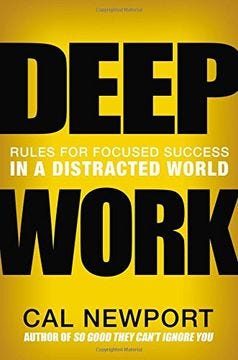
’Deep work’ is the ability to focus without distraction on a cognitively demanding task. This is becoming both rare and valuable. The world is designed to fracture your attention. Email. Slack. Social media. Meetings. Your competitive advantage is going deep when everyone else is staying shallow.
Cal gives you practical systems to actually do this. Time-blocking. Shutdown rituals. The four disciplines of execution. After reading the book I started applying some of the techniques; for instance I schedule 90-minute deep work blocks where I don’t check the phone or other distractions. My output doubled. Not because I worked more but because I worked deeper.
Key takeaway: Shallow work feels productive but rarely moves the needle. Deep work is where the real value is created.
On Writing Well by William Zinsser
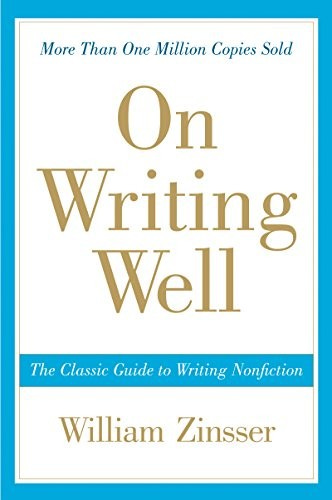
The best book about the writing craft I’ve ever read. Zinsser strips away the clutter and shows you how to write with clarity, simplicity, and humanity. Every sentence matters. Every word should earn its place.
What makes it great is that Zinsser doesn’t just tell you what good writing looks like. He shows you with his own good writing and examples. He takes mediocre passages and transforms them right in front of you. You see the before and after. You understand why one version works and the other doesn’t.
Key takeaway: “Clutter is the disease of American writing. We are a society strangling in unnecessary words, circular constructions, pompous frills, and meaningless jargon.” Strip your writing down. Say what you mean.
Forbidden Keys to Persuasion by Blair Warren
The best book on dark human psychology I’ve ever read.
Warren starts with a question: How do some people convince others to willingly act against their own self-interest, while most of us struggle to get people to do things that would clearly help them?
He studied con artists and cult leaders to find the answer. The patterns they use. The psychological principles that make people comply. Warren doesn’t show you how to exploit these traits directly but outlines how they work. Once you see them, you can’t unsee them.
Key takeaway: Logic doesn’t persuade. Emotion does. If you understand what someone fears, dreams, or secretly craves, you can speak directly to that. I have these principles in mind every time I write now.
Man’s Search for Meaning by Viktor Frankl
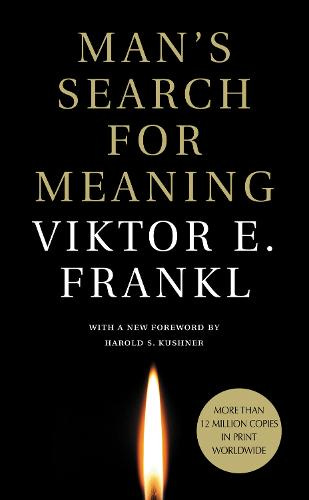
I’m going to be honest. I didn’t want to include this book in the list at all. But after reading it, it earned its place at number three.
The narrative of Viktor surviving WWII concentration camps is a masterpiece on its own. The way he transmits what they lived through. But what really won me over is the last part where he outlines the principles of his Logotherapy school. He explains the essential questions we all have. What is love. Why keep living. What is the meaning of life. This part alone is worth every human being reading this book at least once in their life.
But the combination of his WWII memoir and the philosophy is what makes it stand out. This book shows you empathy and optimism for living while explaining the horror of the camps. That contrast—the brutality and the hope—is what makes it unforgettable.
Key takeaway: “Everything can be taken from a man but one thing: the last of the human freedoms—to choose one’s attitude in any given set of circumstances.”
Sapiens by Yuval Noah Harari
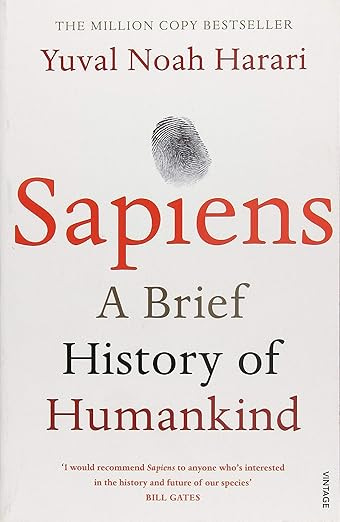
A sweeping history of humankind from the Stone Age to now. Harari’s big idea: humans came to dominate the planet not through physical strength but through our ability to create and believe in shared fictions—religions, nations, money, corporations.
It reframes everything you think you know about human progress. Why did agriculture make us less happy? How did imagined orders shape civilizations? Harari connects dots across millennia to show you how we got here. The patterns. The events. How things came to be the way they are. And somehow, he makes it fun.
Key takeaway: The stories we tell ourselves—about nations, gods, money—are fictions, but they’re the most powerful force in human history.
The Life-Changer: How to Take Smart Notes
Now here’s why How to Take Smart Notes changed my life.
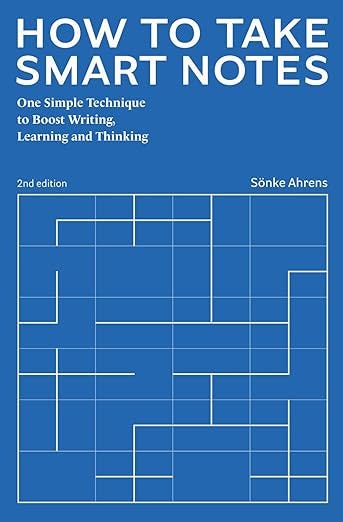
The book is about a note-taking system called the Zettelkasten method, developed by German sociologist Niklas Luhmann. Luhmann published 70 books and over 400 articles in his career. When asked how he was so productive, he pointed to his note-taking system—a physical box of index cards where each card contained one idea, linked to related ideas.

Sönke Ahrens explains how this system works and why it’s so powerful.
Most people take notes to store information. Luhmann took notes to think.
Every time he read something interesting, he didn’t just highlight it or write “good point” in the margin. He created a permanent note—a single idea, written in his own words, with connections to other ideas already in his system. Over time, these notes formed a web of knowledge that could generate new insights on its own.
That’s the paradigm shift.
Before reading this book, I was taking notes but they were scattered everywhere. Highlights in my Kindle that I’d never look at again. Random observations in my phone. Quotes scribbled in notebooks I’d lose three months later. And when I needed an idea for an article or wanted to remember what I’d learned from a book six months ago? Gone. Lost in the chaos.
Here’s what changed.
Now I underline everything that seems interesting while reading. Then I go back and process those highlights. I don’t just copy them—I rewrite them in my own words, connect them to other ideas in my system, and store them in my knowledge database. I use Obsidian, but the tool doesn’t matter. The process does.
It takes time. I’m not going to lie about that. But I’m building something that compounds.
Every note I take today becomes raw material for future writing. Every connection I make between ideas generates insights I wouldn’t have seen otherwise. My newsletter? Half the time it starts with me connecting my notes and noticing patterns I didn’t plan before.
This is why this book changed my life. It didn’t just give me information. It gave me a system for turning reading into thinking, and thinking into output.
Why This Book Stands Out
The other books I read this year were excellent. They gave me knowledge, inspiration, frameworks for specific problems.
Deep Work taught me to protect my time. On Writing Well taught me to cut clutter. Forbidden Keys to Persuasion taught me what actually moves people.
But How to Take Smart Notes taught me how to build a system where all of that knowledge compounds over time instead of fading the moment I close the book.
Most books give you insights. This one gives you a meta-skill: a way to get more value from every other book you’ll ever read.
In 2025, with AI everywhere, we’re starting to wonder what intelligence even means. Can AI replace thinking? Should we let it?
This book reminded me that the goal isn’t to outsource thinking—it’s to extend it. When you build a system for capturing and connecting ideas in your own words, you’re compounding the limits of your human intelligence. You’re creating something bigger that grows over time.
The act of processing ideas, connecting them to what you already know—that’s where the magic happens. AI can help you write. But it can’t replace the thinking. Your note system becomes an extension of your mind.
The Bottom Line
If you’re going to read a book from this list, make it How to Take Smart Notes.
Not because the other books aren’t worth it—they absolutely are. But because this one will change how you approach all the others.
Start building your knowledge database now. Every note you take, every idea you capture and connect, becomes part of a system that gets more valuable over time. Most things depreciate. Your note system appreciates.
What was your standout book in 2025? or do you have any other recommendation? Hit reply and let me know—I’m always looking for my next read.
➤ Kicking off 2026: What if building a thriving Substack was as simple as answering 50 questions for your ideal reader? Curious about this quiet path to authority? Read next week’s issue.
➤ If you liked this article, help me restacking it 🔄