

3 Steps to Find Your Unique Newsletter Personality
Scott Adams' simple insight that makes your voice uncopyable on Substack.

Limited time: Get the Top 10 Substack Take-off Secrets free (paid members only after December 31st)

The ten foundational steps to turn your writing into a sustainable business. Stop guessing what to write, who to write for, and how to make money. These ten steps give you the complete business foundation successful creators built before they “made it.”
Think back to when you were in school
I’m sure you had some subjects you were good at and others you weren’t.
I had this teacher who taught history. Topics I was genuinely excited about. The biggest empires, ancient civilizations, how the world was shaped. These should have been the most engaging classes. But she managed to make every single hour feel endless. The content was fascinating. She made it feel like a chore.
On the other hand, I had teachers who taught subjects I didn’t care about. But they made them fun. They made me want to go to class. Suddenly I enjoyed learning something I thought I’d hate.
The difference? Not the content. The delivery.
The same thing happens with the books you read. You follow certain authors not because of their genre, but because of them. Their voice. Their perspective. How they make you feel.
This is exactly what happens on Substack.
People don’t just follow topics. They follow people. On Substack especially, readers aren’t looking for generic tips or rehashed advice they can find anywhere on the internet. They’re looking for you. Your personality. Your life experience. Your unique perspective.
Your real competitive advantage isn’t what you write about. It’s you.
On Substack, where you’re surrounded by thousands of good newsletters, the only way to stand out is through differentiation. You need to understand what makes you different. That’s your Unique Selling Proposition, or USP—something competitors won’t or can’t replicate.
Your newsletter should do the same.
This framework breaks down how to build that USP in three parts: the WHAT only you can talk about, the HOW you express it, and the composition of both that makes it impossible to replicate.
Part 1: The What — Your Uniqueness & Zone of Genius
Your zone of genius is the things only you could write about.
The things only you can speak to because of who you are, what you’ve lived through, and why you’re good at what you do.
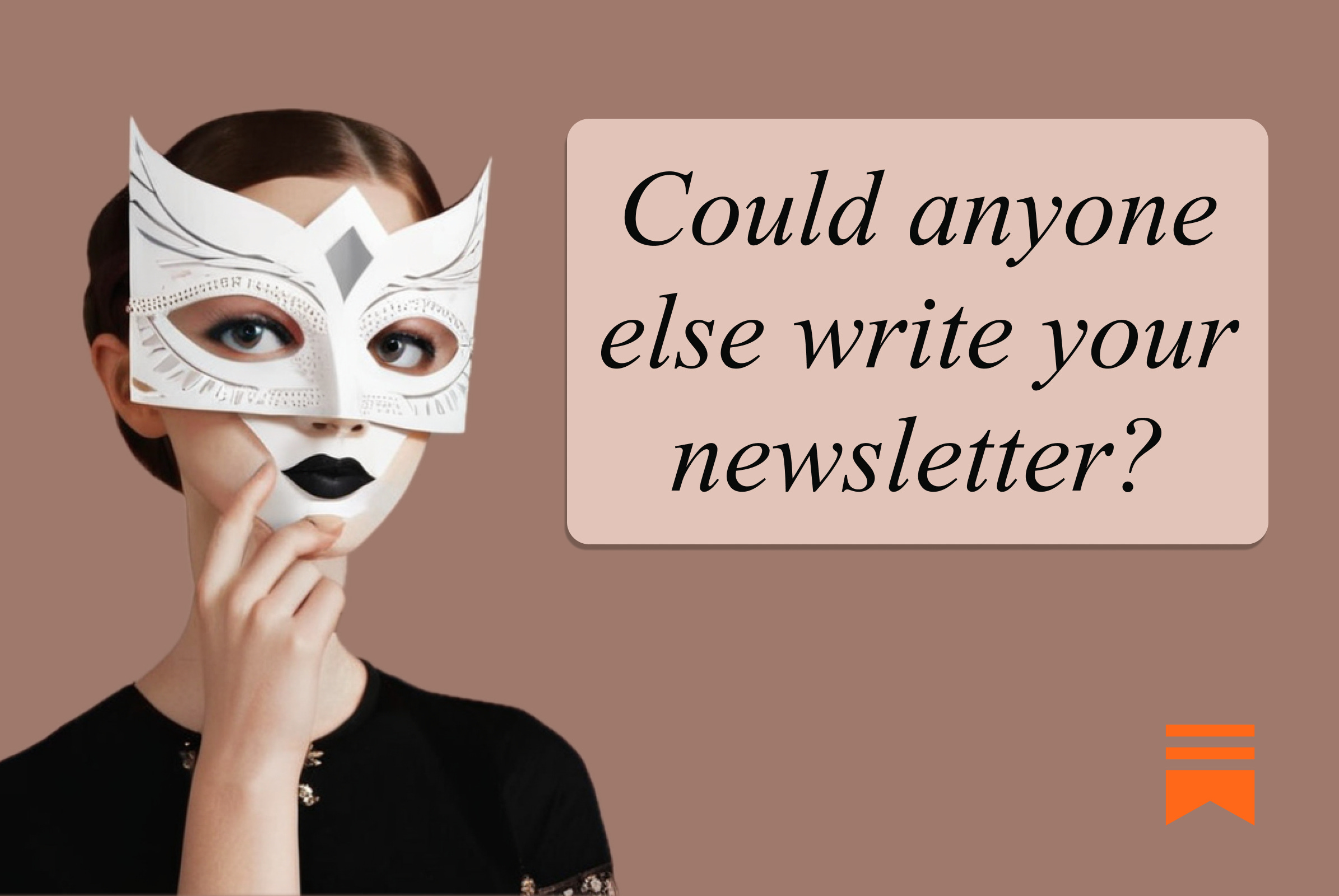
Start with this question: Could anyone else besides me have written this?
If the answer is ”yes,” you haven’t found your zone of genius yet. If an AI could have written it, or if a thousand other people could say the exact same thing, then it’s not your content—it’s content that happens to have your name on it.
Your uniqueness lives at the intersection of:
Your story and unique experience (why you do it)
Your topics and work (what you do)
Your processes (how you do it)
It’s why you do what you do. It’s the things you enjoy talking about. It’s the hard-won lessons nobody else has learned in exactly the way you have. Weave those in. Share your story. Amplify your personality. Make it impossible for someone to read your words and imagine them coming from someone else.
This will be the foundation everything else builds on it.
Part 2: The How — Your Unique Expression
Ask yourself: Why do you admire certain creators but ignore others?
It’s not because they’re smarter or more talented. It’s because they’re _themselves_. They show up with personality. They don’t polish away everything that makes them interesting.
Back in 2007, Scott Adams—creator of Dilbert—figured something out that is still relevant today.
He was talking about paths to an extraordinary life. He basically said: don’t try to be the best at one thing. That’s near impossible. Few people will ever play in the NBA or make a platinum album. Instead you should strive to become very good at two or more things.
I believe everyone has at least a few areas—that with some effort—they can become very good at.
Adams knew he could draw better than most people. Not great. Just better than most. He also happens to be quite funny. Funnier than most people, anyway.
Here’s where the magic happened: few people could draw and write jokes. The combination made him rare. Then he threw in his business background. Suddenly he had insights about corporate culture that cartoonists didn’t have.
That combination—drawing + humor + business knowledge—that’s what made Dilbert unmistakable.
And this is exactly what your HOW should be.
Stop trying to be the best writer on Substack—that would be nearly imposible. Stop trying to be the best designer or analyst or storyteller—same principle. You should try to be very good at multiple things and let that combination speak for itself.
Think about how you actually think. Do you visualize things? Then add charts and data to your storytelling. Do you naturally break complex ideas into simple frameworks? Then combine that with humor and personal examples. Do you think in stories? Then weave narratives through your analysis.
Don’t confuse with being well-rounded. This is about expressing your actual, natural way of thinking through your newsletter.
Robert Greene did this. He didn’t invent the study of power. But he combined historical narratives with principle extraction in a way nobody else did before. He pulls a character from history, tells their story, distills the universal principle. Few people execute both skills at that level. That’s his HOW. That’s why his writing feels unmistakable.
Your expression is the combination of skills you bring, how you naturally think. Made visible on the page.
Part 3: The Composition — Your USP
If your newsletter can be written by AI or replicated by someone else, then it’s not really yours.
But if it’s the unique blend of multiple mediums and skills you bring—your topic, your format, how you actually present ideas—then it becomes impossible to copy.
That’s what separates you from the rest.
While researching this article, I stumbled across a Substack that perfectly exemplifies what I’m talking about:

Look at how every element—the nuggets he talks about, the visual identity, the mind-maps, the quotes—work together to make his newsletter HIS. You can’t copy it because it’s not a technique. It’s just him, authentically.
Stop hiding behind perfectly-polished writing. Stop copying exactly what chat-GPT says. Stop erasing your personality to sound ”professional.” Stop trying to fit into what you think a newsletter should be and find your newsletter personality. Is your competitive advantage.
The way you think. The way you explain things. Your sense of humor. Your unique combination of interests. The specific blend of skills nobody else has. That’s not something you hide. It’s the only thing worth sharing.
Here’s what happens when you actually let your personality shine through: people recognize themselves in you. They see someone who thinks like they do. Someone who expresses ideas in a way they enjoy. And suddenly they’re not just readers—they’re subscribers. They’re part of your tribe.
This is what builds a real newsletter. Not algorithms. Not viral hacks. Not trying to be everything to everyone.
Just the unique expression of yourself. Authentically.
”You can escape competition through authenticity, when you realize that no one can compete with you on being you.” — Naval Ravikant
Your goal is simple: When someone reads your newsletter, even if they don‘t see your name, they immediately have to know it was written by you.
➤ Next week: You’ve got your unique personality dialed in. Now let’s uncover which of the 12 brand archetypes fits you best. Curious what yours is? Read next week’s issue to find out. Read next week’s issue.
➤ If you liked this article, help me restacking it 🔄